
Define the scope
What problem does this service address?
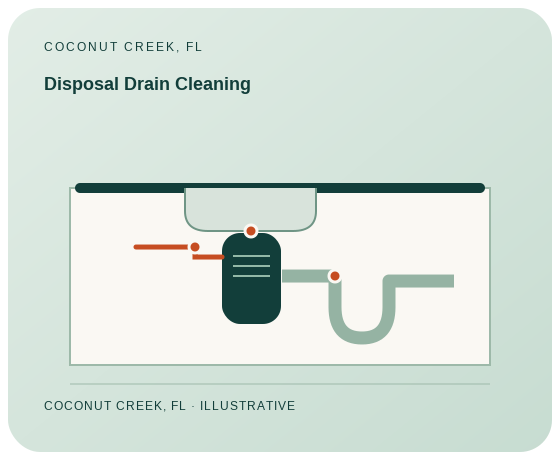
Garbage disposal drain cleaning addresses a restriction in the connected sink waste path. The problem can involve the discharge elbow, trap or kitchen branch rather than the grinding mechanism itself. The key distinction is whether the motor works normally while water fails to drain. A useful assessment locates the restriction before choosing an access point or deciding that appliance replacement belongs in the proposal.
Compare the existing symptom with our Coconut Creek disposal replacement guide for garbage disposal drain cleaning before choosing between correction and a new appliance. This guide focuses on clear the connected kitchen waste path when water does not drain; explain what is happening now rather than ordering work from the service name alone.
Diagnosis before parts
How is the right method selected?
We compare flow from the affected bowl, the other bowl and any connected dishwasher. The timing of backup helps define the route to inspect. Accessible waste fittings may need evaluation, while a farther restriction can call for a different cleaning method and access. The method must suit the pipe condition and the location found; a cable, dismantling a fitting and appliance work are not interchangeable solutions.
The useful endpoint is a clear relevant waste route, not merely an empty bowl for a moment. Ask where the restriction was found and whether a physical connection defect could make it recur.
Describe what you see
Which eight clues should you mention?
Mention which bowls and appliances are affected so we can distinguish a local fitting from a farther restriction.
- The motor sounds normal but the bowl stays full: drainage and rotation need separate evaluation.
- Both sink bowls back up: describe the connected behavior rather than reporting only the disposer side.
- Backup appears during dishwasher pumping: the shared waste route and hose connection deserve inspection.
- Slow flow returns soon after cleaning: a recurring restriction or arrangement problem may remain.
- Gurgling accompanies a slow drain: report the sequence without assigning a cause from sound alone.
- Water escapes at a waste fitting: the restriction and the leaking joint may require different corrections.
- Other fixtures are affected too: tell us so a wider drainage issue is not overlooked.
- A recent drain-connection change preceded trouble: preserve our information and describe the timing.
Separate the components
What can change the proposed correction?
Food residue, grease and material that should not enter the sink can collect in the waste path. An unfavorable connection arrangement or another pipe problem can also contribute to recurring slow flow. Clearing material may restore drainage without correcting an underlying installation issue. When the same sink repeatedly backs up, ask whether we have identified a persistent physical cause rather than assuming another cleaning attempt will permanently resolve it.
One alternative to compare is garbage disposal unjamming. A mechanical stall belongs to a different part of the system than a restricted pipe. If the motor turns normally, restoring movement cannot by itself establish that the branch is clear. Request a proposal tied to the observed drainage route.
Prepare the useful evidence
What can you prepare without taking equipment apart?
Stop using the sink when water backs up and avoid running the dishwasher into the same restricted route. Tell us about any drain chemical already added, including the product and approximate timing. Keep others away from standing water containing chemicals. Do not mix products, disconnect a full trap or keep operating the disposer in the hope that motor power will push a downstream obstruction away.
- The exact model and any safely visible connection information.
- A short timeline of the symptom and the last kitchen work.
- Photographs of the present arrangement rather than dismantled parts.
- The owner or manager who can authorize the proposed correction.
Assessment through handover
What should happen during us visit?
Establish the starting condition.
Expect us to establish which fixtures are affected and whether the restriction is local to the sink or part of a broader drainage issue. Ask what access and method are proposed, what the quoted attempt covers and when further authorization would be needed. In a managed building, a suspected common-line problem may require coordination before work extends beyond the unit’s assigned responsibility.
Agree on the work and its boundaries.
For drain work, agree on the access point, cleaning method and the route being investigated. Define whether a farther or common-building restriction requires another authorization. Ask how disturbed fittings will be restored and what sink or dishwasher discharge will be checked at completion.
Check the finished arrangement.
A completion check should use the relevant sink bowls and, where appropriate, the dishwasher discharge. Ask whether normal flow was restored and whether the arrangement showed another defect. Keep a record of the access point, cleaning performed and any recommendation for further investigation. A briefly empty bowl does not by itself show that a recurring branch problem has been permanently corrected.
Compare the complete scope
What affects cost and approval requirements?
Restriction location, available access, pipe condition and the method needed influence cost. Removing an accessible trap obstruction is different from work farther along a kitchen branch or a building-managed route. Ask whether repeated attempts, restoration of removed fittings and testing are included. Where us suspects a connection defect, obtain a clear explanation of why cleaning alone may not be the complete remedy.
| Restriction location | Discharge elbow, trap, kitchen branch or a broader system issue. |
|---|---|
| Access and method | What can be reached and which approach suits the observed pipe condition. |
| Building coordination | Permission or management involvement for any shared drain scope. |
| Testing and restoration | Refitting disturbed parts and checking the relevant discharge routes. |
Have us confirm project-specific plumbing and electrical permit requirements with Coconut Creek’s Building Division. An owner’s or association’s permission is separate. If water leaves the disposer but backs up farther along the kitchen route, replacing the motor may leave the restriction untouched. Ask us to define the appliance, accessible waste and any broader drainage scope separately. Do not attribute an indoor fault to canals or public watermain work without evidence.
Address the active fault
When should normal use stop?
Stop adding water when the bowl is rising or wastewater is escaping into the cabinet. If other fixtures or neighboring units are affected, describe that pattern and alert the relevant building management. Avoid contact with contaminated water and any wet electrical connection. A backup with a burning or electrical symptom needs those hazards addressed as well; it should not be treated as a routine invitation to keep testing the disposer.
Plan for the actual home
How does the property setting affect the visit?
Local context for South Creek: South Creek combines a Coconut Creek property location with Margate water and wastewater service. Those are separate responsibilities: municipal plumbing questions remain with Coconut Creek, while an account or utility issue follows the actual supplier. For a disposal problem, first distinguish the appliance and kitchen branch from a wider utility concern.
Describe the address south of Coconut Creek Parkway rather than sending we to a similarly named community elsewhere. Confirm any property-specific access or owner permission. The neighborhood name does not establish one association rule or contractor-entry procedure for every parcel.
A different setting is CocoBay. The community’s reported housing period does not establish the age of a particular disposer. A replacement sink or appliance can leave a mixture of fittings from different projects. Identify the current mount and models, especially if trouble began after dishwasher or disposal work. Discuss these details when requesting garbage disposal drain cleaning so the proposal fits the home rather than a broad neighborhood assumption.
Six practical answers
What should you ask before authorizing the work?
Does a powerful motor clear a kitchen branch blockage? Start with that distinction, then confirm the business’s own proposal and terms.
Does a powerful motor clear a kitchen branch blockage?
A disposer processes material at the sink; it does not establish that the downstream pipe is clear. If water remains despite normal rotation, ask for the waste path to be assessed before paying for a stronger appliance.
Can I keep running the dishwasher?
Avoid adding dishwasher discharge to a sink route that is backing up. The equipment may share part of the restricted path. Describe the layout and symptoms to us so we can determine what is safe to use.
Should I add chemical cleaner first?
Do not mix drain products or add another product to an unknown existing treatment. Report anything already used to us before work begins. Product hazards and standing contaminated water can change the safe access procedure.
Who handles a common drain in a condominium?
Responsibility depends on the building’s documents and the location of the restriction. Ask your association or manager and us to define the unit-level scope. A disposer visit does not automatically authorize work on a shared building line.
Why might cleaning be temporary?
Material can be removed while a physical connection defect, damaged pipe or another recurring cause remains. Ask what was observed and what additional assessment would distinguish those possibilities. Avoid accepting a permanent guarantee that the findings do not support.
How should restored flow be checked?
Ask for the connected bowls and relevant dishwasher discharge to be evaluated under the agreed scope. The invoice should explain where access was obtained, what was cleared and whether another defect was found. Keep that record if symptoms return.
Coconut Creek communities
Where can you find this service by community?
In the garbage disposal drain cleaning guide for South Creek, the local starting question is: Where is the fault located, and is this a kitchen task or a separate utility issue? Confirm the actual address and coverage directly with us.
- Garbage Disposal Drain Cleaning in Township
- Garbage Disposal Drain Cleaning in Wynmoor
- Garbage Disposal Drain Cleaning in Winston Park
- Garbage Disposal Drain Cleaning in South Creek
- Garbage Disposal Drain Cleaning in Regency Lakes
- Garbage Disposal Drain Cleaning in Centura Parc
- Garbage Disposal Drain Cleaning in Country Lakes
- Garbage Disposal Drain Cleaning in Tallowwood Isle
- Garbage Disposal Drain Cleaning in Banyan Trails
- Garbage Disposal Drain Cleaning in CocoBay
- Garbage Disposal Drain Cleaning in Victoria Isles
- Garbage Disposal Drain Cleaning in Coquina
- Garbage Disposal Drain Cleaning in Buttonwood Hammocks
- Garbage Disposal Drain Cleaning in Indigo Lakes
- Garbage Disposal Drain Cleaning in Crescent Creek