
Define the scope
What problem does this service address?
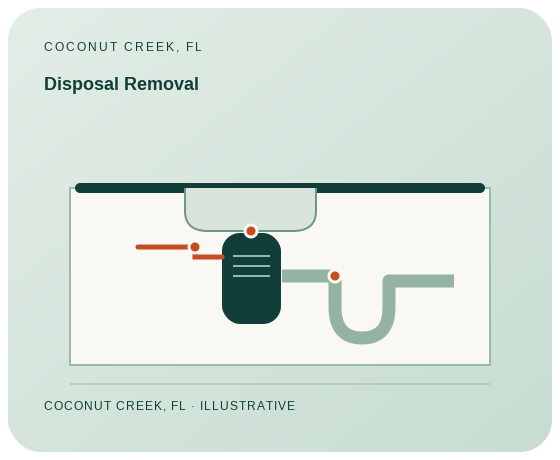
Garbage disposal removal converts the sink from a powered disposer to a suitable conventional waste connection. Taking out the motor is only part of the work. The sink needs a compatible strainer, a complete discharge and trap arrangement, and an appropriate route for any dishwasher that previously drained through the unit. Electrical disconnection or termination must also be assigned to the appropriate qualified trade.
Compare the existing symptom with our Coconut Creek disposal replacement guide for garbage disposal removal before choosing between correction and a new appliance. This guide focuses on remove the appliance and convert the sink to a conventional drain; explain what is happening now rather than ordering work from the service name alone.
Diagnosis before parts
How is the right method selected?
We assess the sink opening, existing drain and dishwasher hose before selecting replacement fittings. It plans safe support of the appliance while removing it and checks that the proposed conventional drain can connect without unsuitable alignment. Any electrical work is handled within the confirmed trade scope. The finished sink must drain correctly and the dishwasher must retain a functioning discharge route rather than a loose hose left behind.
Check the proposed finished sink, not just the empty space left by the motor. The new strainer, trap, dishwasher connection and electrical scope must be defined before detachment begins.
Describe what you see
Which eight clues should you mention?
Removal can be a household choice, but existing leaks, drainage faults and a retained dishwasher still need their own plan.
- You prefer a conventional sink: explain the intended final use so we can plan the complete conversion.
- The old housing leaks: the active fault and any wet electrical area need attention before handling.
- A dishwasher uses the disposal inlet: its replacement discharge connection must be included.
- Storage is the main goal: compare the shape of the proposed trap and fittings before expecting a clear cabinet.
- The mounting seal also leaks: the sink-side condition must be addressed as the old assembly is removed.
- Electrical disconnection is unclear: assign that responsibility before scheduling the physical removal.
- The sink already drains slowly: removal alone may leave a downstream restriction in place.
- A rented or managed property is involved: establish who can authorize a permanent change to the kitchen.
Separate the components
What can change the proposed correction?
Removal may be a household preference, an alternative after appliance failure or part of a cabinet and sink redesign. Those reasons do not establish that the existing branch drain is clear or that every old fitting can be reused. A leaking mount or damaged pipe may require correction during conversion. Ask us to evaluate the intended finished arrangement instead of quoting only the time needed to detach the old unit.
One alternative to compare is garbage disposal installation. If a household still wants a powered disposer, compare a complete new installation with the conventional-drain conversion. Include the dishwasher connection and electrical scope on both sides so the comparison reflects usable finished systems.
Prepare the useful evidence
What can you prepare without taking equipment apart?
Decide whether you want a conventional sink permanently or are comparing removal with another disposal. Photograph the visible dishwasher hose, drain route and cabinet obstructions. Tell us whether the existing unit leaks or has an electrical symptom. Do not disconnect wires, release the appliance from its mount or leave a dishwasher hose without a planned receiving connection as a preliminary task.
- The exact model and any safely visible connection information.
- A short timeline of the symptom and the last kitchen work.
- Photographs of the present arrangement rather than dismantled parts.
- The owner or manager who can authorize the proposed correction.
Assessment through handover
What should happen during us visit?
Establish the starting condition.
A removal proposal should identify the new strainer, drain fittings, dishwasher route and electrical responsibility. Ask whether disposal of the old appliance and restoration of disturbed connections are included. If us encounters unsuitable existing pipework, agree on additional work before it proceeds. The handover should show a usable sink and explain what changed, including any appliance control that is no longer in use.
Agree on the work and its boundaries.
For conversion to a conventional drain, list the strainer, waste fittings, retained dishwasher route and electrical responsibility. Ask who takes the old appliance away and how the finished kitchen will be demonstrated. Do not accept removal alone as the description of a complete working sink.
Check the finished arrangement.
Check that water drains through the converted bowl and accessible joints remain dry during the agreed test. Where a dishwasher is retained, ask for its discharge to be demonstrated through the new connection. Keep the invoice identifying the conversion components and electrical scope. Review storage clearance after the drain change; the shape and position of the new fittings can differ from the old disposal arrangement.
Compare the complete scope
What affects cost and approval requirements?
The new strainer, trap configuration, dishwasher fitting, access and electrical work shape the conversion price. A quote for detaching a motor may exclude the parts needed to leave a working kitchen. Ask who removes the appliance from the property and whether testing is included. Compare that complete proposal with a replacement option if you are deciding between the two, without assuming removal is always cheaper.
| Conventional drain | Compatible strainer, tailpiece, trap and necessary connection fittings. |
|---|---|
| Dishwasher continuity | A suitable replacement receiving point and discharge check. |
| Electrical scope | Who isolates, disconnects and completes any required termination. |
| Handover | Old-appliance removal, cleanup, usable sink and accessible leak checks. |
Have us confirm project-specific plumbing and electrical permit requirements with Coconut Creek’s Building Division. An owner’s or association’s permission is separate. Determine who owns and can authorize changes to the home’s kitchen equipment. If home-specific installation requirements need another trade or additional information, resolve that before the appliance purchase. A conventional-drain conversion is a legitimate alternative to discuss when a disposal is not the chosen arrangement.
Address the active fault
When should normal use stop?
An active leak or electrical fault in the old unit must be made safe before the conversion begins. Stop the relevant equipment and keep clear of water around electrical parts. Removal should not be improvised by releasing mounting hardware while the appliance hangs from a connected drain or cord. In a managed building, notify the responsible party if water has reached another unit or a common area.
Plan for the actual home
How does the property setting affect the visit?
Local context for Country Lakes: Country Lakes is a managed manufactured-home community. Disposal work should start with the actual home’s sink support, cabinet space and installation requirements. The park name and prospectus history do not establish the construction of a present home, which may have been replaced or altered since the community began.
Use the correct lot or home identifier and confirm access with the resident or relevant community contact. Ask about permission for the proposed modification rather than assuming a universal homeowners-association or gate rule. We need enough information to bring parts suitable for the actual home.
A different setting is Buttonwood Hammocks. A representative villa from around 1980 does not date every kitchen in the named area. Focus on the current door opening, sink depth and waste fittings. The appliance may need to be maneuvered through limited access even when its installed footprint would otherwise fit. Discuss these details when requesting garbage disposal removal so the proposal fits the home rather than a broad neighborhood assumption.
Six practical answers
What should you ask before authorizing the work?
Can the sink work without a disposal? Start with that distinction, then confirm the business’s own proposal and terms.
Can the sink work without a disposal?
It can use a suitable conventional strainer and complete waste arrangement where the sink and connections allow that conversion. We must plan the final drain path. Simply removing the appliance leaves unfinished plumbing rather than a usable sink.
What happens to the dishwasher connection?
A dishwasher that used the old disposal needs an appropriate receiving connection after removal. Include that route and the final discharge test in the proposal. Do not assume the hose can remain connected to a component that is being taken away.
Who handles the electrical side?
Ask which appropriately qualified trade will assess and perform the needed disconnection or termination. The proposal should define that task explicitly. A plumbing-only removal price does not establish that every required electrical change has been included.
Will removal cure a blocked kitchen drain?
Not necessarily. The trap or branch can remain restricted after the disposer is gone. Describe existing slow drainage separately so we can investigate it. A conversion and drain cleaning can be different parts of the project.
Does a new sink strainer fit every bowl?
The sink opening, material and selected fitting must be compatible. Have us confirm the parts and sealing method. A generic strainer purchase made before the assessment can leave a missing or unsuitable component when the old mount is removed.
How should I compare removal and replacement?
Compare complete installed scopes: new fittings, dishwasher continuity, electrical work, testing and old-appliance removal. Then weigh your household’s preferred use. A bare appliance price and a partial detachment quote are not equivalent alternatives.
Coconut Creek communities
Where can you find this service by community?
In the garbage disposal removal guide for Country Lakes, the local starting question is: What home and sink information do you need before confirming this installation? Confirm the actual address and coverage directly with us.
- Garbage Disposal Removal in Township
- Garbage Disposal Removal in Wynmoor
- Garbage Disposal Removal in Winston Park
- Garbage Disposal Removal in South Creek
- Garbage Disposal Removal in Regency Lakes
- Garbage Disposal Removal in Centura Parc
- Garbage Disposal Removal in Country Lakes
- Garbage Disposal Removal in Tallowwood Isle
- Garbage Disposal Removal in Banyan Trails
- Garbage Disposal Removal in CocoBay
- Garbage Disposal Removal in Victoria Isles
- Garbage Disposal Removal in Coquina
- Garbage Disposal Removal in Buttonwood Hammocks
- Garbage Disposal Removal in Indigo Lakes
- Garbage Disposal Removal in Crescent Creek